Photo Credit: Our World-Underwater Scholarship Society
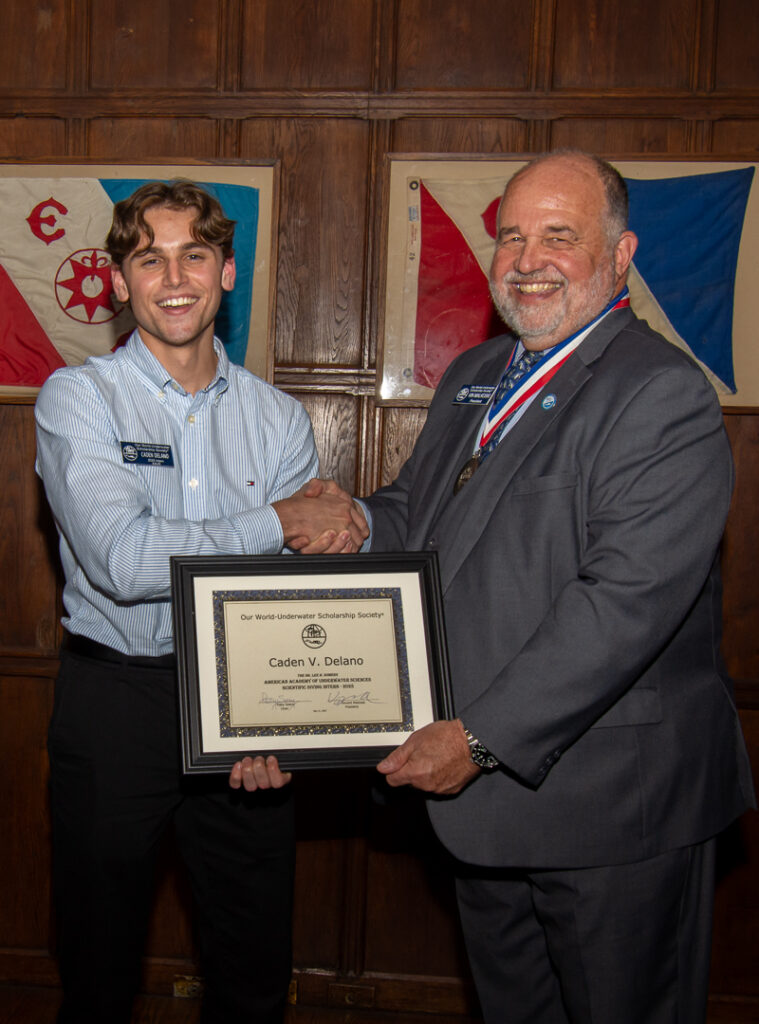
Hi there, my name is Caden Delano and I am a marine science student from the University of Florida and an ichthyologist at the Florida Museum of Natural History. I would like to start off by thanking the Our World Underwater Scholarship Society (OWUSS) for giving me the honor of receiving the Dr. Lee H. Somers Scientific Diving Internship. My expectations and excitement for the summer internship consumed me for weeks as I prepared my travel plans to Washington. I was certain that my experience diving in Florida would serve me well, but I knew that the cold water, strong currents, low visibility, and task loading that I would be introduced to would serve to mold me into a skilled diver. I was grateful to have this opportunity and excited to begin!
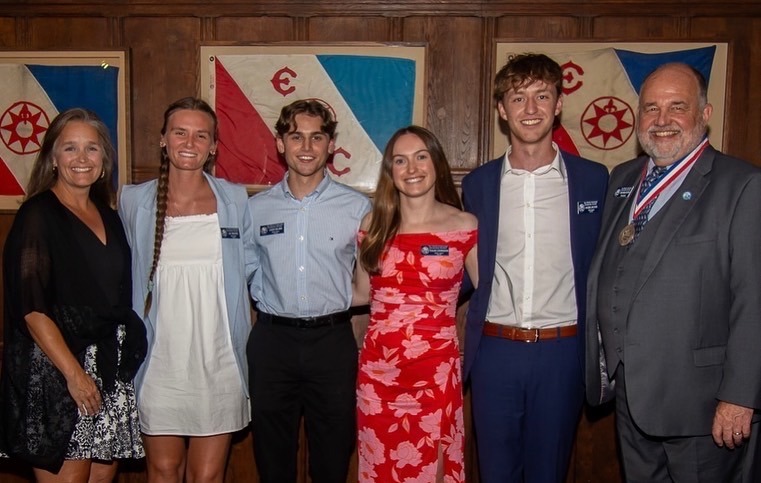
Photo Credit: Our World-Underwater Scholarship Society
I connected with many inspired OWUSS members during the 51st Annual Awards Ceremony in New York City and watched the quality presentations of my peers. That same enthusiasm was found at the Shannon Point Marine Center, where I obtained my scientific diving certification, aided in abalone conservation research, and conducted young of the year (YOY) rockfish surveys under many inspired scientists. In addition to thanking the OWUSS, I would like to extend my gratitude to the American Academy of Underwater Sciences (AAUS), Shannon Point Marine Center (SPMC), and Fourth Element for supporting me throughout my summer internship. Every one of these organizations welcomed me with open arms and made my summer memorable.
I arrived in Anacortes, WA and immediately met one of my mentors, Dr. Derek Smith! Derek was eager to ensure I had everything I needed to succeed upon arriving. He also entertained me with stories from his time studying marine science around the globe. I can confidently say that I have now gained a few of my own stories from my experience this summer.
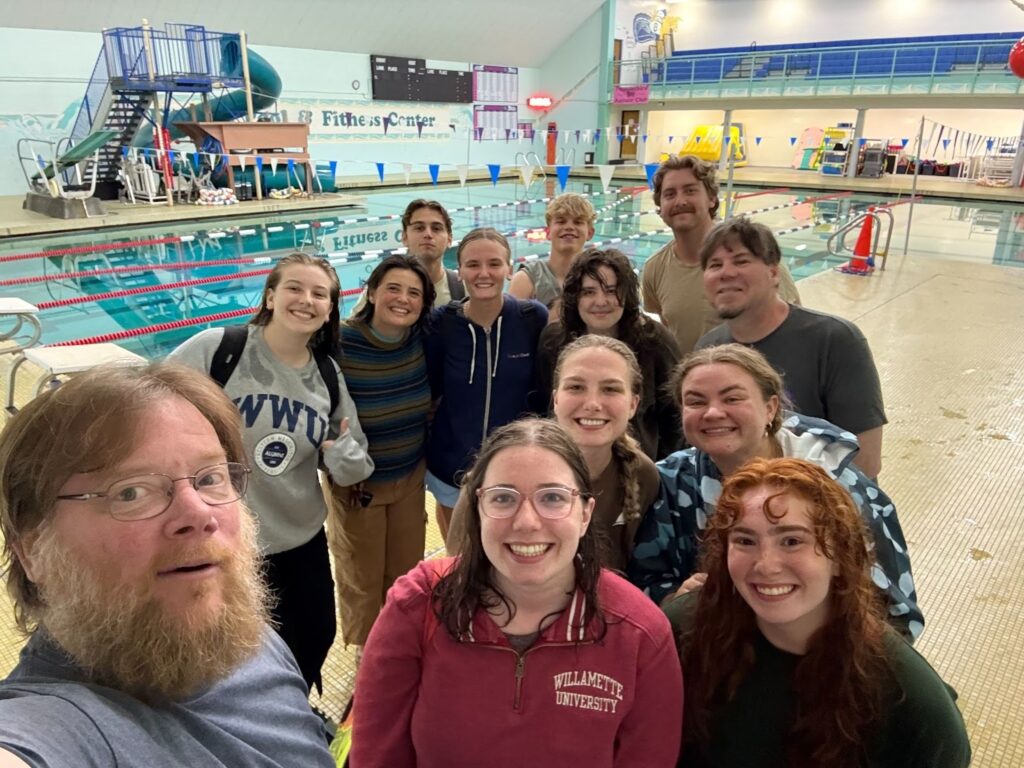
One of my peers, Lily Moore, and I received our brand new wetsuits, booties, and gloves in the mail, courtesy of Fourth Element. Upon testing them in the water we found that they fit nice and snug while keeping us warm in the 50℉/10℃ waters of the Salish Sea! The rest of the gear we needed to conduct research this summer was graciously provided by Dr. Nathan Schwarck and the SPMC dive locker. We started our scientific diving training in the Fidalgo Pool & Fitness Center and created a team of dependable divers along the way.
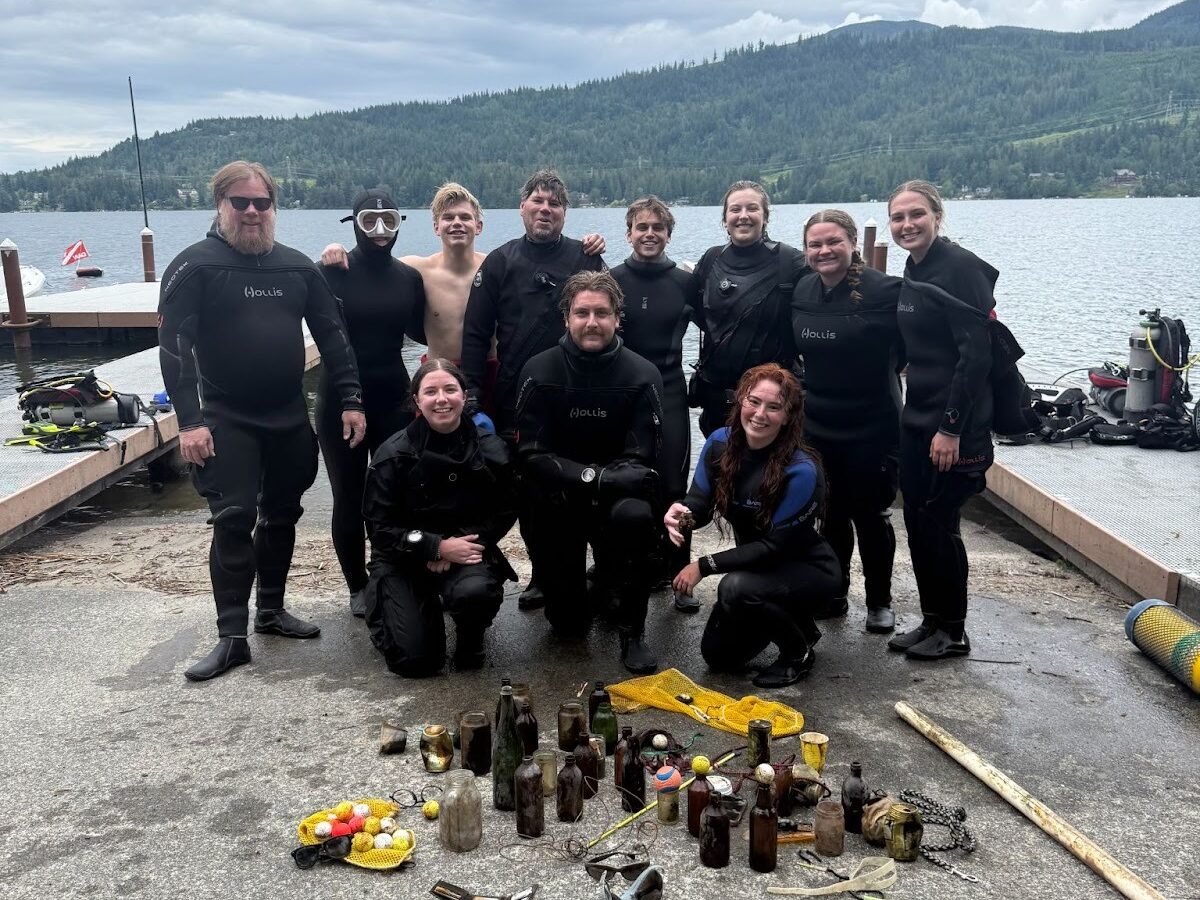
After our pool training we kicked off our summer scientific diving program by doing a cleanup dive at Lake Whatcom. Navigation was difficult in the murky water with little to no natural landmarks to guide us. Nate didn’t have a problem navigating right to us, a skill we continued to work on throughout the summer. By the end of our dive we were flush with golf balls, but the most notable was a Western Washington’s Student wallet and ID found by Derek.
Our dive training continued as we learned how to handle heavy objects underwater with lift bags. This training was particularly helpful because the scientific diving team was later tasked with retrieving three artificial reef modules after they had been submerged for a one year period. They were held down by heavy cement bricks, and were completely covered in algae that blended into the rest of the sea floor. To make things worse, we could only dive on the slack tide, otherwise the current would take us faster than we could kick. We had to use our navigation skills, teamwork, and lift technique to successfully retrieve them in our 10 minute window, but the good news is we had two slack tides in the day. Our first attempt was demoralizing. We retrieved one of the reef modules, but the current fought us soon after. We needed to take half the amount of time to grab the next two modules, so we formulated a plan. The OWUSS Mitchell Scientific Diving Intern Lilly Moore was especially helpful and took charge of the operation. A well defined plan was exactly what we needed in order to work in quick succession and get the other two reef modules out of the water.
While we had gotten experience lifting heavy objects out of the water, in the dive rescue certification course we took turns lifting our “unconscious” buddies out of the water! We also practiced CPR and the use of AEDs in the event of a dive emergency. The instruction provided by Dr. Smith and Capt. Schwarck was invaluable and exceeded the standards of a classic rescue diver scenario. The challenging conditions of the Salish Sea such as the frigid waters and rocky shores created the perfect training grounds. I came out of that course knowing I’ve prepared for the worst so I can meet future challenges at my best.
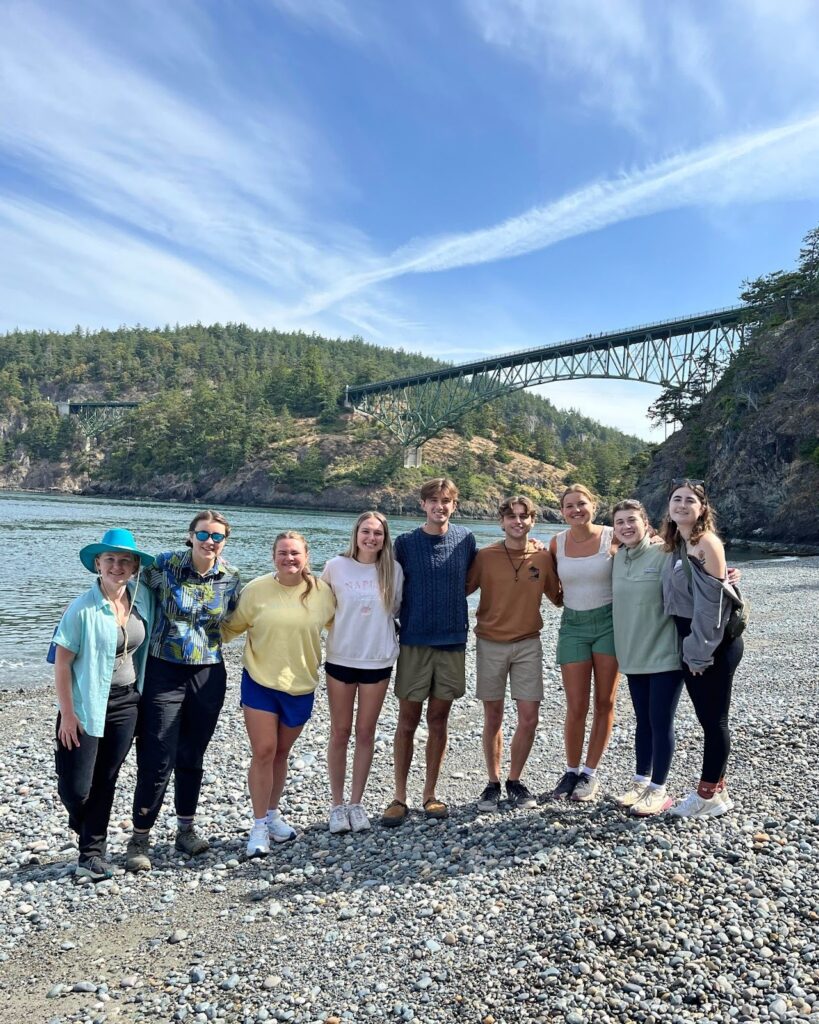
Dr. Brian Bingham led the Research students and OWUSS/AAUS interns on a hike around Deception Pass, a breathtaking landmark with astonishing currents and an interesting history of deceiving Captain George Vancouver into thinking it was a bay or inlet.
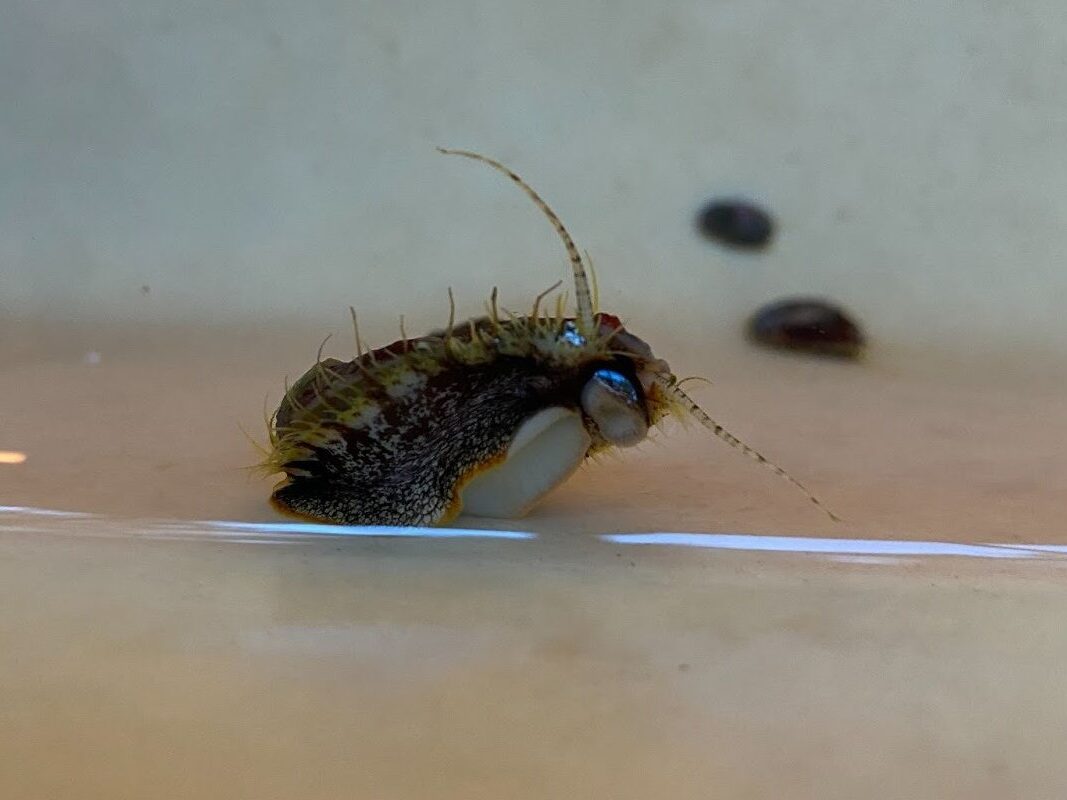
A few weeks later marked the beginning of our research focus. Our shipment of 2,867 juvenile abalone arrived, and with it, a responsibility to keep them alive. The first week after they arrived we noticed the abalone made a habit of climbing out of their sea tables and desiccating, so our young team of scientists rotated checking on the abalone and placing them back in the water until they grew accustomed to their new environment. They were fed with dulse seaweed and their tanks were cleaned as necessary. This experience was a great introduction to husbandry, a skill I expect to use more often in the field of conservation research.
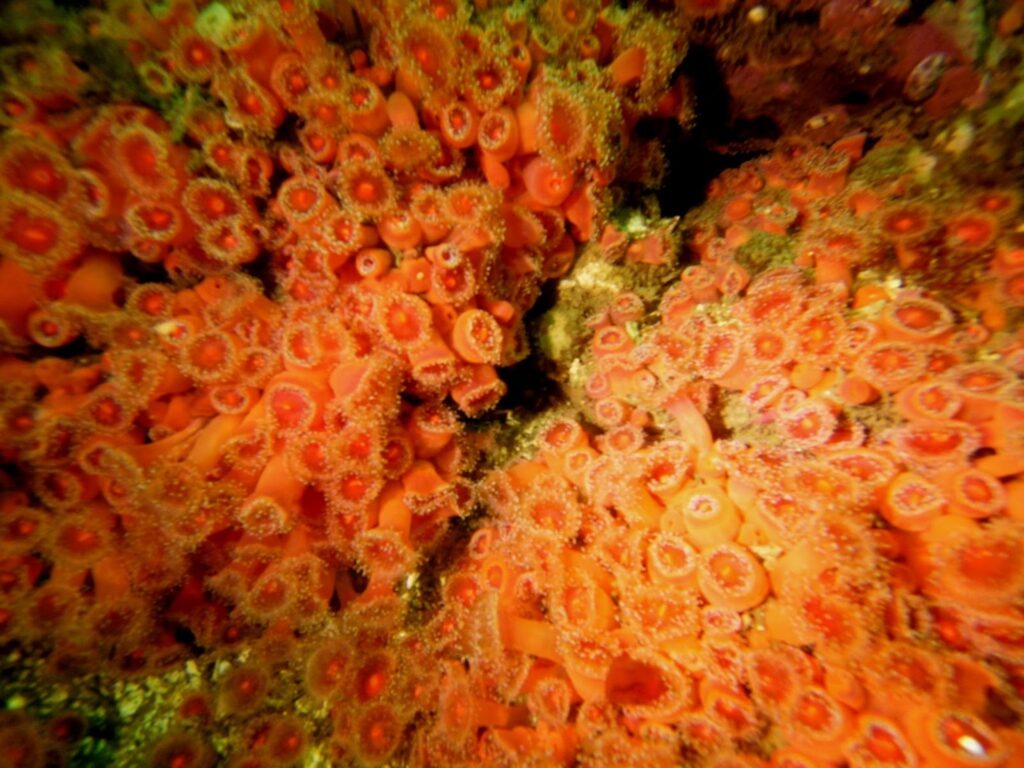
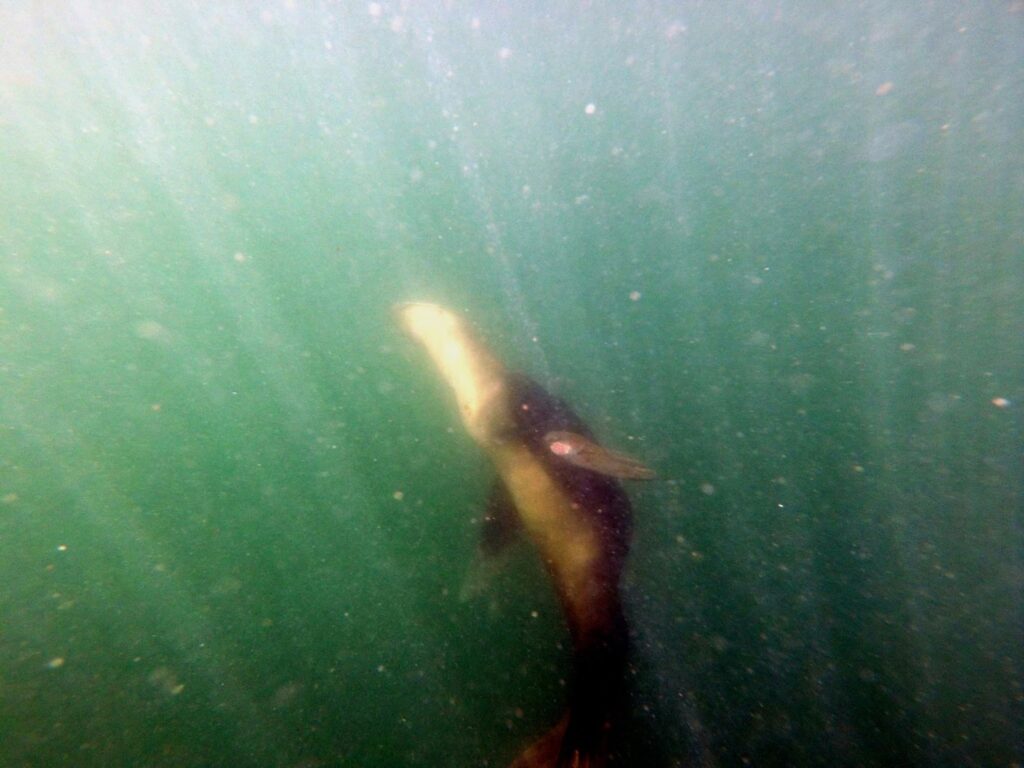
One of my favorite dives this summer was when the 2025 SPMC Science Diving Class visited the legendary Strawberry Falls dive site, famous for its thriving strawberry anemone population and high biodiversity due to its proximity to the open ocean. On our ascent, I heard a muffled scream through my dive buddy’s regulator at the same time that a torpedo shot past us. I captured a blurry picture of what turned out to be a curious Steller sea lion as it swam by. Seeing a sea lion underwater checked a box off my bucket list!
