Washington Department of Fish and Wildlife (WDFW)
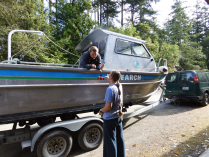
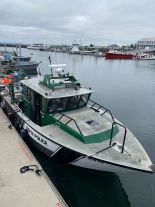
A unique opportunity to go out on the WDFW law enforcement boat was a great insight into how science and public safety collide. Seeing how organised and structured their dive operation was, was inspiring. We saw a pod of orcas from the boat containing two fully grown males whose fins stood proudly tall above the water line for many moments before sinking below the untouched surface. It was such a magical experience. After they finished their dive to collect sea cucumbers, I got to help them with taking length measurements which involved splitting them open and pulling their insides out. This was an odd experience since at depth they seem so tough but when you open them on land and release the water pressure they are really just fleshy moulds. We then weighed their gonads which became a part of a larger dataset that will inform them of whether to change the dates of the fishery.
Credit: Lily Moore
Caption: The WDFW police boat I went out on to observe their sea cucumber collection
Samish Indian Nation Dive Team
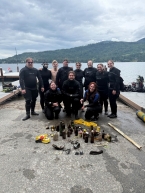
Another project I had a more hands-on role for was a collaborative effort to pick up artificial reef module systems (ARMS) which had been laid down a year prior. They are essentially mini apartment buildings for organisms which was an amusing site. The task of recovering these ARMS was a 2 day event. The first day I went out with the Samish Indian Nation dive team in order to do recon and get a good idea of where exactly they were laying after being in the field for a year. This was my first ocean dive in Washington. I had anticipated the cold, but nothing prepared me for my first breath after my head was submerged. I’ll never forget the sound of the ice cold water seeping into my wetsuit hood… which quickly became one of my favourite sounds ever after I fell in love with the kelp thickets, sea lions, and cold water reefs that Washington has to offer. What a great introduction to PNW diving! The second dive day was to consist of actually rigging and lifting the ARMS out of the water. This, however, did not go exactly to plan. There were strong currents and my fellow divers were newly certified from the dive program at SPMC and as such didn’t have the experience to handle these conditions yet. We gave it our best shot but in the end had to call the dives and return to shore. This was the first of many times this summer that I learned that science doesn’t always go to plan. (a WDFW team returned a few days later and were able to retrieve them).
Proficiency Dives
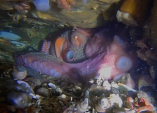
SPMC is lucky enough to be in close proximity to Walla Walla University’s Rosario Beach Marine Lab where Dr. Allan Verde and Dr. Jim Nestler conduct their scientific diving program. I teamed up with them and a couple of their students to go on proficiency dives most weekends. This experience gave me the opportunity to dive at Keystone which is a unique shore diving site next to a ferry terminal, known for its abundant marine life including giant plumose anemones, diverse nudibranch species, and even plentiful octopus gardens. This is by far my favourite dive site of all time. I dove there often with Tabi from the State Park Service and Joe from NOAA who are such knowledgeable and skilled divers. I learned a lot from these proficiency dives such as how to read tide and current tables and to determine if conditions are safe to dive at a site. I learned to slow down while diving and peek into every crevice because you never know when 2 little eyes might be poking out at you belonging to the elusive giant pacific octopus (GPO). I had read all about them before diving there and was desperately excited at the prospect of finally seeing one, since I had been dreaming about them ever since I was a little girl… but to actually see one in person was like nothing I’ve ever experienced before. I was truly and totally enthralled by it. I sat in front of one den for half of a dive and only swam away because I reached my turn around pressure. I could have watched it for hours; the way its tentacles unraveled and its siphon periodically swayed open and closed, they’re incredibly rhythmic and mystical creatures. After each dive I felt I surfaced with more questions about them and it would keep me returning each week even when I had to wake up at 4am to make the slack tide.
Credit: Lily Moore
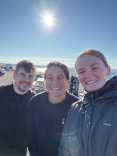
Caption: left – Keystone dive site, middle – Tabi & Joe before our Keystone dive, right – the first Giant Pacific Octopus I saw (I named her Daphne)
Sessile Jellyfish Research with Nate
The DSO at SPMC took me and the other OWUSS intern (Caden Delano) to Possession Point State Park on South Whidbey Island where we were looking for Aurelia sp. Jellyfish polyps in their sessile phase as a part of Nate’s personal research. This dive site was unique in 2 ways: firstly, it was a beach where you are stood in 7ft of water and then suddenly it drops off to almost 300ft of water almost immediately; secondly, it was an estuarine environment meaning that it was not rocky (as most of Washington’s coastline is) but sandy. Unfortunately this dive was another lesson in how science doesn’t always go to plan because we were unable to locate the polyps. However, I had a truly magical experience at the start of the dive as well as 50ft of visibility (unheard of in Washington) which made the trip worthwhile. As we completed our buddy checks on the surface, I heard the unmistakable sound of a large mammal’s blowhole… I paused midway through checking my BCD deflator and dumps to see the tail of a humpback whale descend gracefully not far from where we were. We completed buddy checks and remained on the surface for an additional couple of minutes to watch as the whale surfaced another few times. Our slack tide timings were specific however, and it was time to descend. As the familiar woosh of cold water seeping into my wetsuit hood hit my ears, it was drowned by another, unfamiliar sound. We all looked at each other confused for a second before our eyes lit up in turn as we realised it was the sound of the humpback emanating throughout the water column. As it continued to sing I breathed in the moment and noted how its tone was simultaneously high pitched and deep; a sound I could never re-create with my human vocal chords.
Credit: Lily Moore
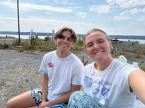
Caption: Me and Caden after hearing our first humpback whale underwater.
Abalone restoration
SPMC hosts a number of Research Experience for Undergraduate (REU) students each summer in addition to the 2 OWUSS interns, a couple of whom were a part of the scientific dive class and subsequently conducted an underwater research project which I was able to be a part of. We collaborated with Puget Sound Restoration Fund (PSRF) who gave us almost 800 pinto abalone to experiment on and outplant, as well as funding to complete our research.
Pinto abalone (Haliotis kamtschatkana) populations remain critically low despite ongoing restoration efforts. To improve outplanting success, we tested the effectiveness of clear and opaque tubes on abalone dispersal rates and evaluated the predatory behavior of Amphissa columbiana toward healthy and injured abalone. In field trials, clear tubes resulted in significantly faster dispersal rates than opaque tubes, suggesting that increased light exposure may encourage abalone to leave the tubes more quickly and integrate into the natural habitat, potentially improving survival. Laboratory choice experiments showed that A. columbiana did not actively prey on healthy abalone, but significantly preferred injured individuals. This highlights the importance of minimizing injury during handling and transport. These findings suggest that the use of clear tubes and gentle handling protocols may enhance the effectiveness of current abalone restoration strategies. Further research is recommended to explore the benefits of nighttime outplanting, alternative tube anchoring methods, and predator exclusion during outplanting to support long-term recovery of this threatened species.
The field trials mentioned were conducted as a 24 hour dive protocol. We had a team of 12 divers who took it in shifts to count and observe the movements of the pinto abalone out of the tubes every hour on the hour for 24 hours. This dive expedition brought many challenges with it including how to keep people safely warm, fed, and dry between shifts as well as how to account for varying ocean conditions over a 24 hour period. As such, it was a great experience to plan such a dive because it gave me an excellent insight into everything which must be accounted for when you are leading a dive, like I’ve never experienced before.
Credit: Lily Moore
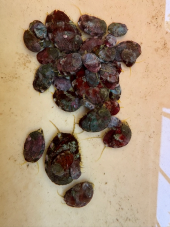
Caption: pinto abalone waiting in a tank at SPMC to be outplanted. Abalone were separated by family to ensure members of each family were mixed into each tube to increase diversity on the seafloor

Credit: Lily Moore
Caption: pinto abalone lined up on a towel to be tagged with glue and a brightly coloured miniature bee tag with a number on it for future retention surveys.
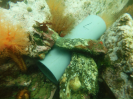
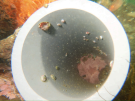
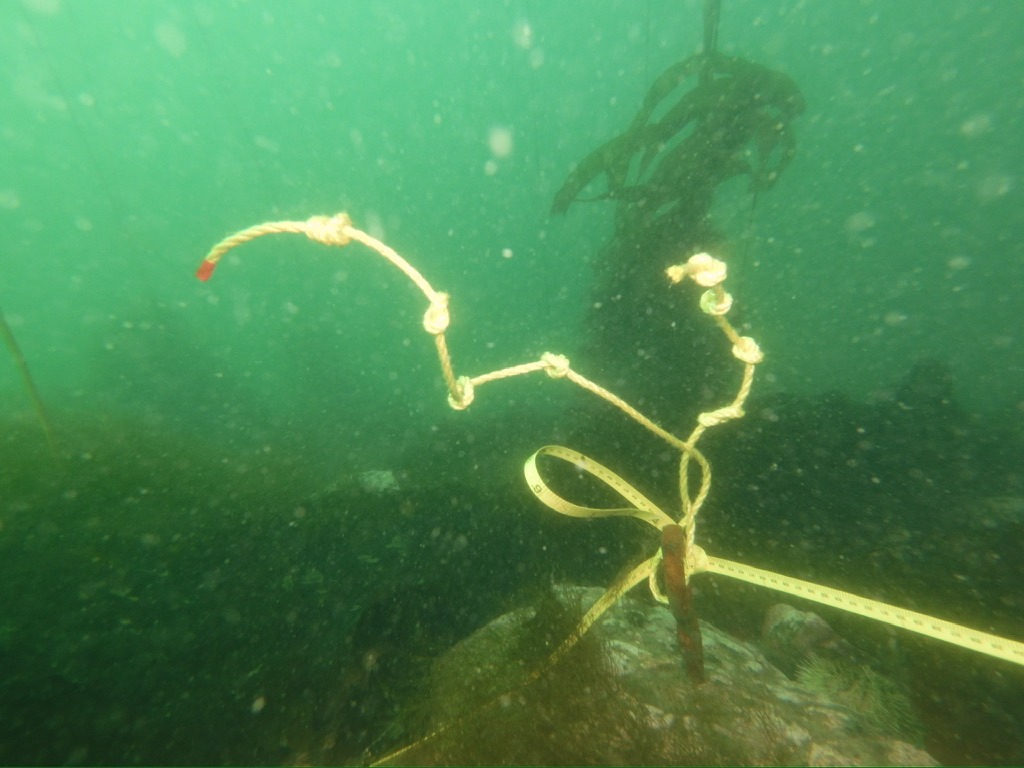
Credit: Lily Moore
Caption: the dive site setup. Left – numbered opaque tube placed on the reef; middle – abalone leaving the tube after a few hours in the field; right – one corner of the dive site which we plotted with measuring tapes and line with a corresponding number of knots based on which corner of the plot it was in (the same setup that PSRF uses).
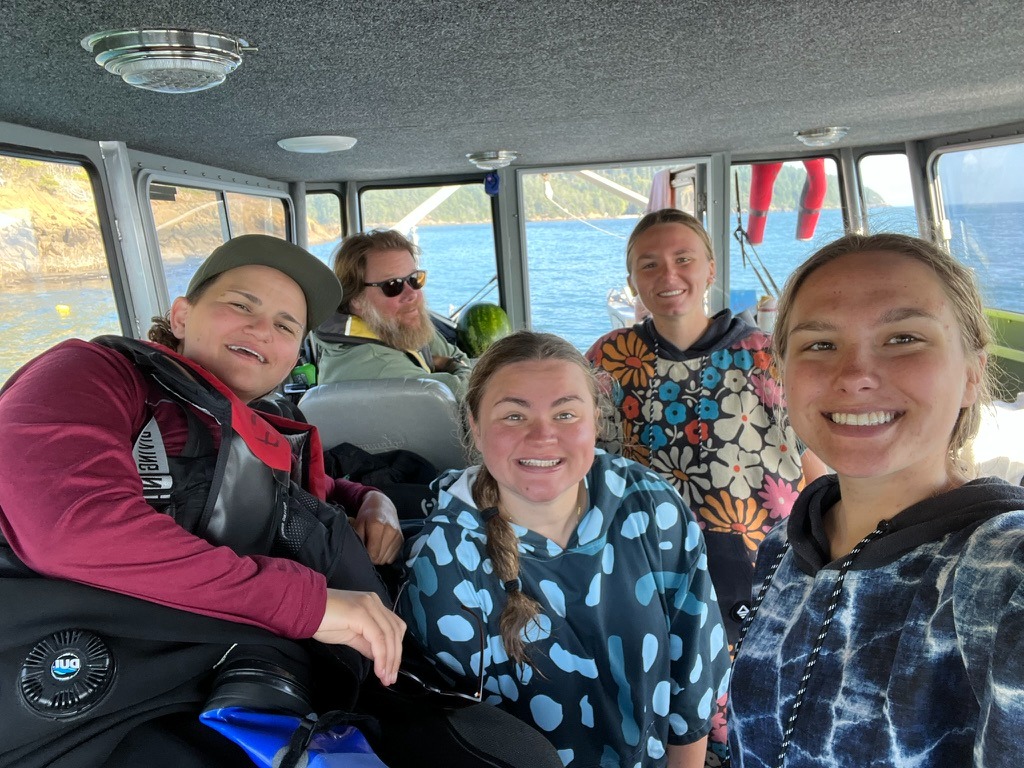
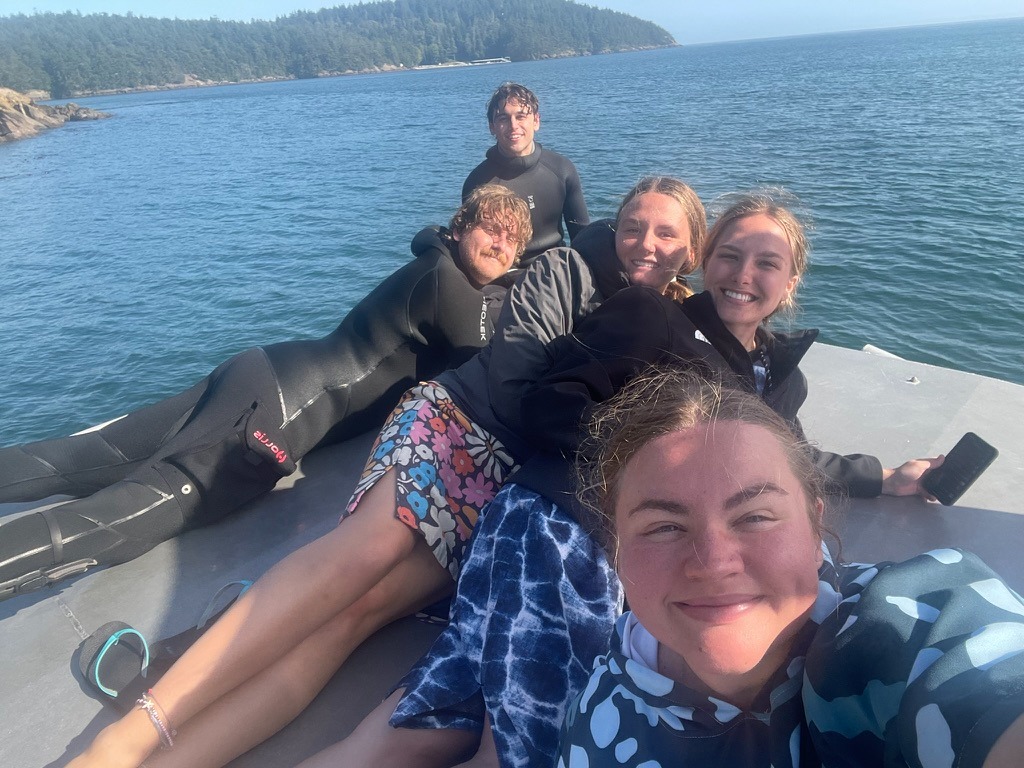
Credit: Lily Moore
Caption: Me and the core dive team for the 24 hour dive on our surface intervals keeping morale high.
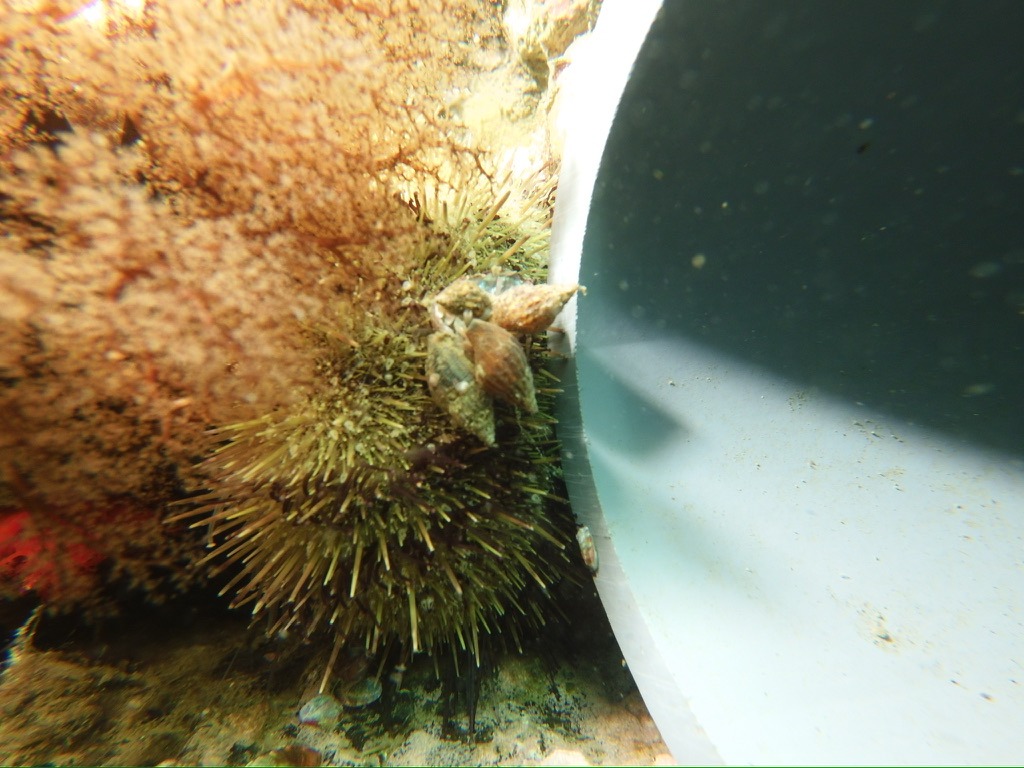
Credit: Lily Moore
Caption: We had a number of other visitors to the outplant tubes including sea urchins and Amphissa snails which are pinto abalone’s number one predator; a part of our project was to document and examine the relationship between the two snail species.
Rockfish surveys
A researcher at SPMC was conducting rockfish surveys on what their depth and size is throughout the San Juan Islands as a part of a very large dataset on them. I had the opportunity to dive with her on a multilevel dive to collect length and depth data in the local area nearby Rosario Beach. This was a great way to connect with other scientific divers at SPMC and emphasised the vastness of what can be researched in the ocean since it was so different to everything else I had done so far.
GPO collection dive
A local aquarium required SPMC divers to collect a GPO for their exhibit which had recently lost its resident GPO. This dive required a lot of planning and was another example of how science cannot always work in our favour – sometimes the ocean has other ideas and we, as humans, must respect that. Myself and a small group of divers had planned this dive thoroughly, gathered all of the necessary materials including multiple nets, fresh water in bottles to wash the GPO out, a knife to open up a clam underwater as an offering to the GPO, as well as the exact location of the GPO in a tire reef (as shown in the image), conditions were as calm as we could have ever hoped for, tanks were filled and we were ready. But GPOs are masters of disguise. No one can capture a GPO once it has decided it’s time to escape, they are true artists of contortion and deception. We had no chance against it in the maze of tires and had to allow the ocean to keep its mysterious creature. I left that day with a great deal more respect for the creatures which I had come to love and appreciate throughout my time in Washington. The aquarium was able to acquire a juvenile GPO from Walla Walla university which had captured one accidentally in a bottle through their research on ruby octopus earlier in the summer.
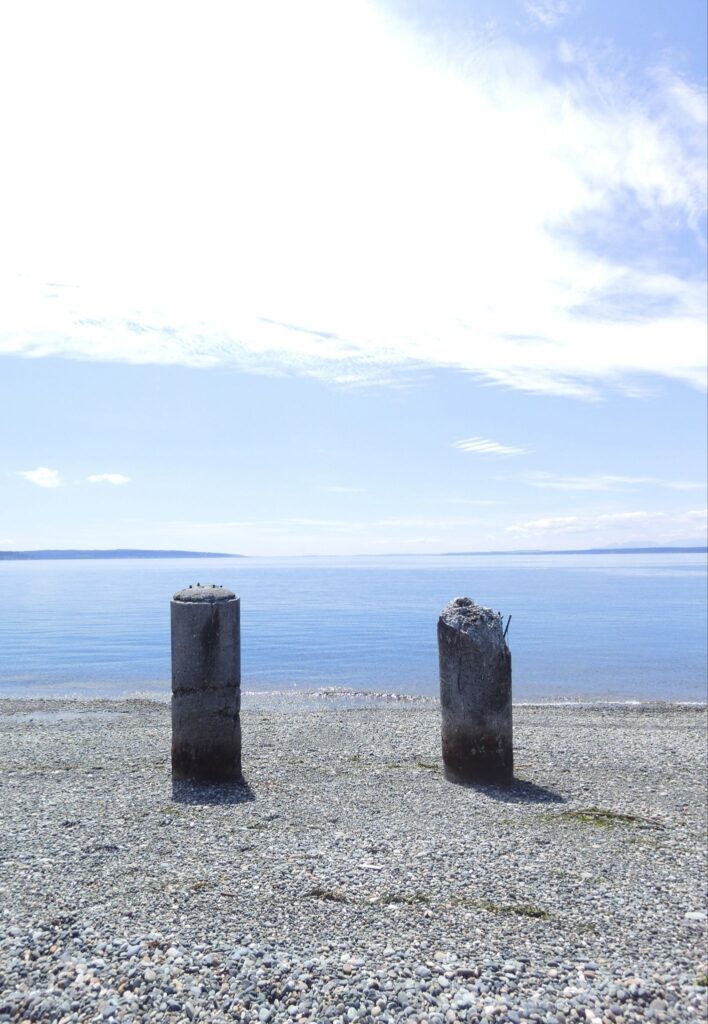
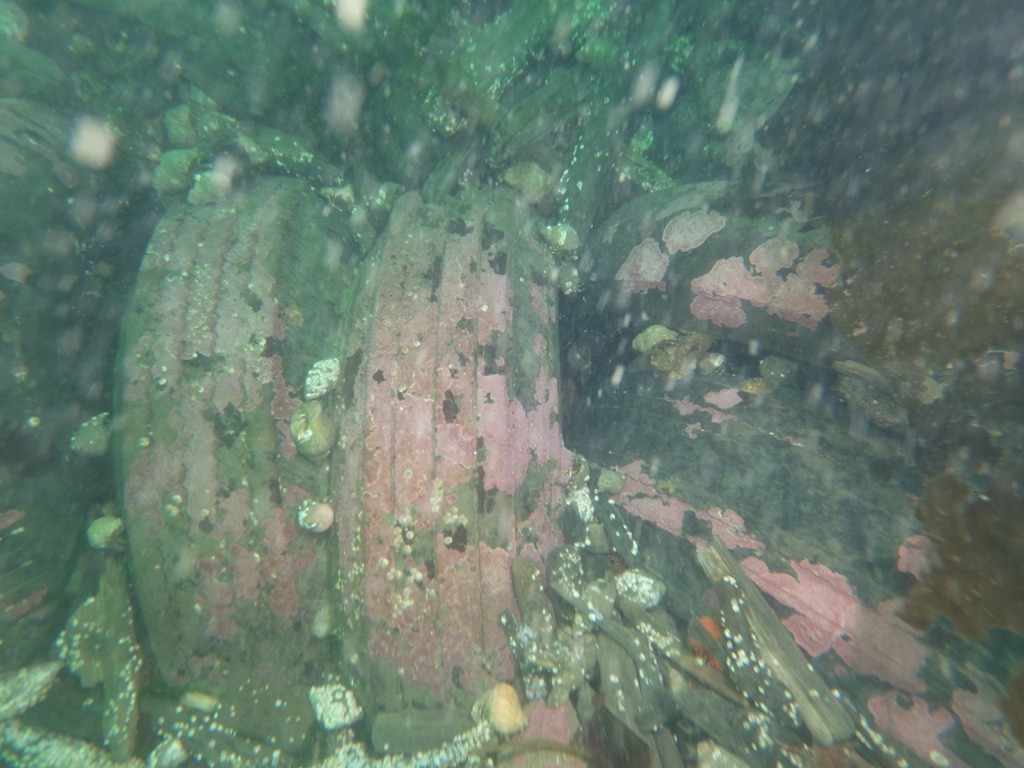
Credit: Lily Moore
Caption: left – perfect calm conditions the day of the collection dive, right – the maze of the tire reef which housed the elusive GPO we were unable to capture
Friday Harbor Labs Lime Kiln Lighthouse
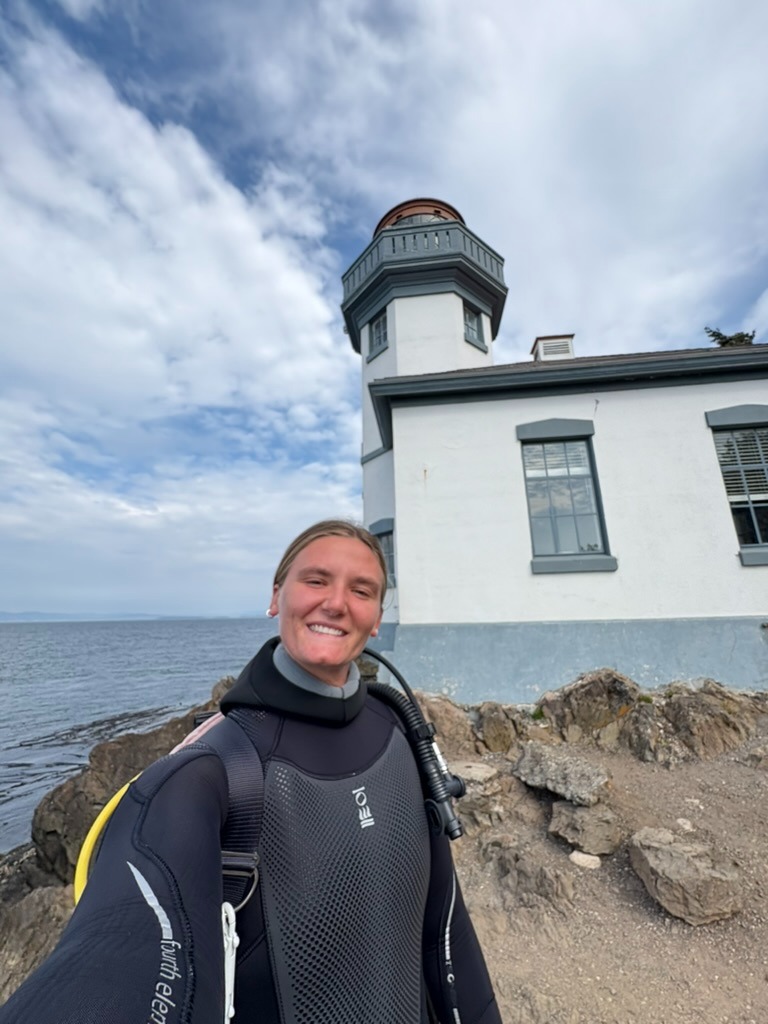
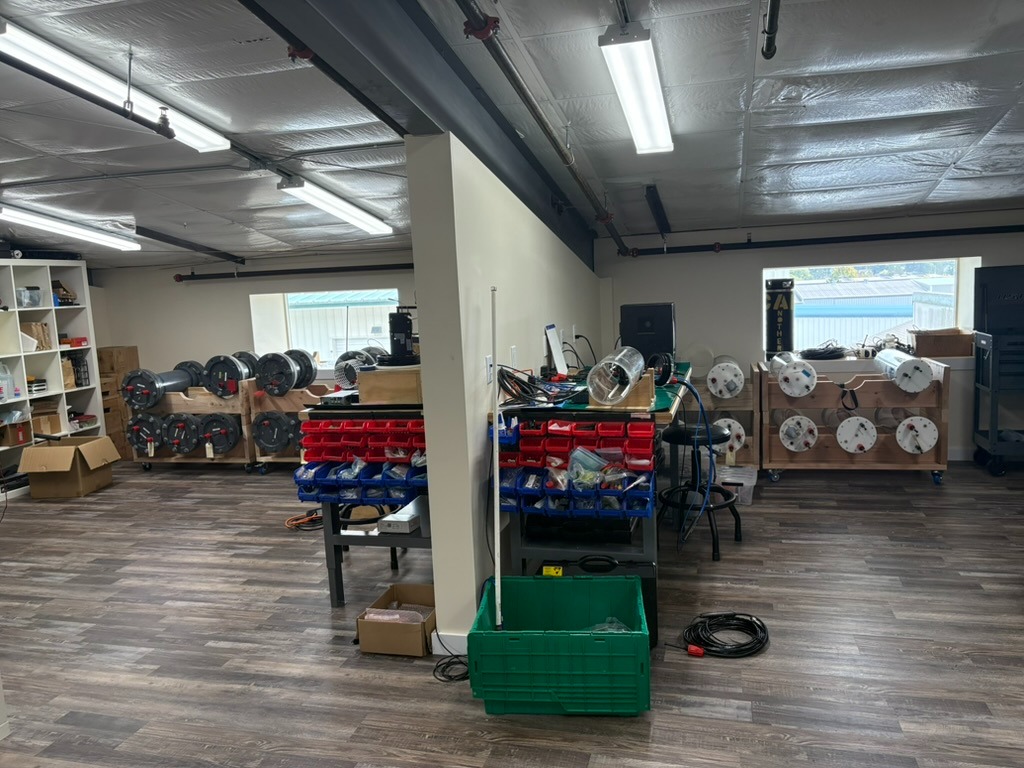
A visit to Friday Harbor Labs brought the opportunity of diving the hydrophone site at Lime Kiln Lighthouse about. We followed the thick cables down from the rather dicey shore entry to where the hydrophones lay and pick up everything from orca vocalisations to ship disturbances to myself and Caden singing a rather bubbly rendition of “Under the Sea” from The Little Mermaid whilst on our dive. Our mission for this dive was to take a video recording of both hydrophones and cables as monitoring; since no one had been down to check on them in a while. Through talking to the hydrophone lab manager, I learned that they are working to reduce vessel speeds in many areas in order to reduce decibel levels which when too high, can interfere with vital whale communication.
Credit: Lily Moore
Caption: left – me geared up before the dive at Lime Kiln Lighthouse, right – the hydrophone lab which we had the honour of visiting.