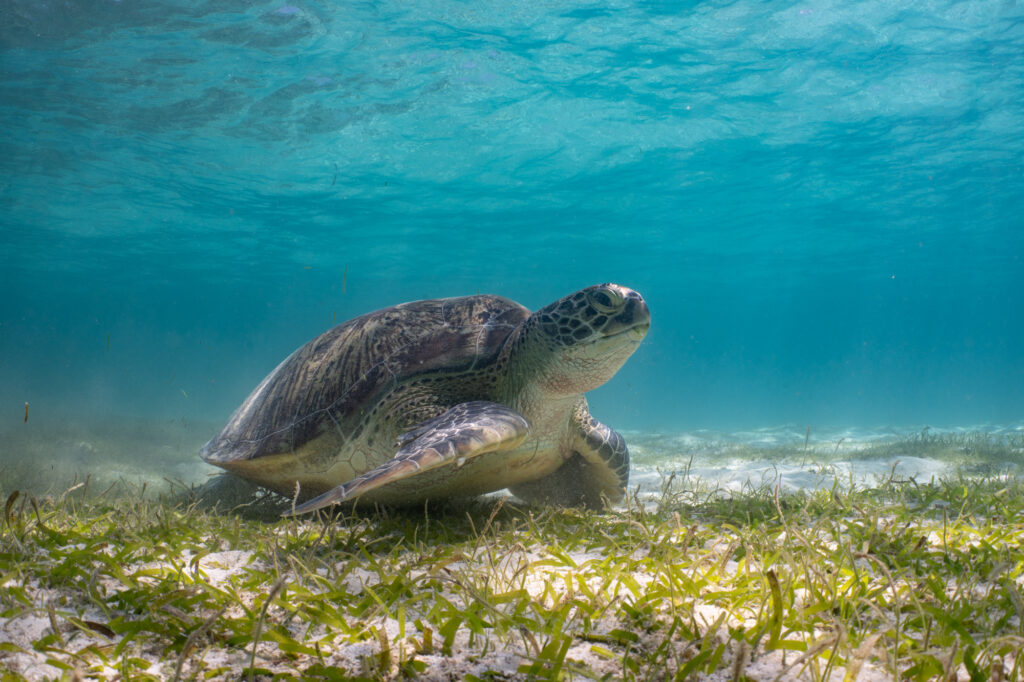
I saw my first turtle in the Maldives before the seaplane even landed. Bleary-eyed after 40 hours of non-stop travel, I was initially convinced that I was seeing things, but as I continued peering out across the reefs, the shape became unmistakable: a turtle surfacing to breathe, enormous even when viewed from far above. Seconds later, it fell away from view, replaced by vibrant reefscape, as the plane circled my new home for the next few months, the resort Six Senses Laamu.
I’m still pinching myself that I get to stay here, in one of the most biodiverse regions in the Maldives! As the second part of my OWUSS internship, I’m working for the Maldives Underwater Initiative (MUI), a cutting-edge marine biology center based at the resort. The team of scientists here spearheads research projects from seagrass surveys to manta monitoring, alongside guest and community education programs. MUI also partners with three non-profits – the Manta Trust, the Olive Ridley Project, and Maldives Resilient Reefs – establishing the center as a powerhouse of marine research in the region. As a new intern, my main role is to help document their science in action.
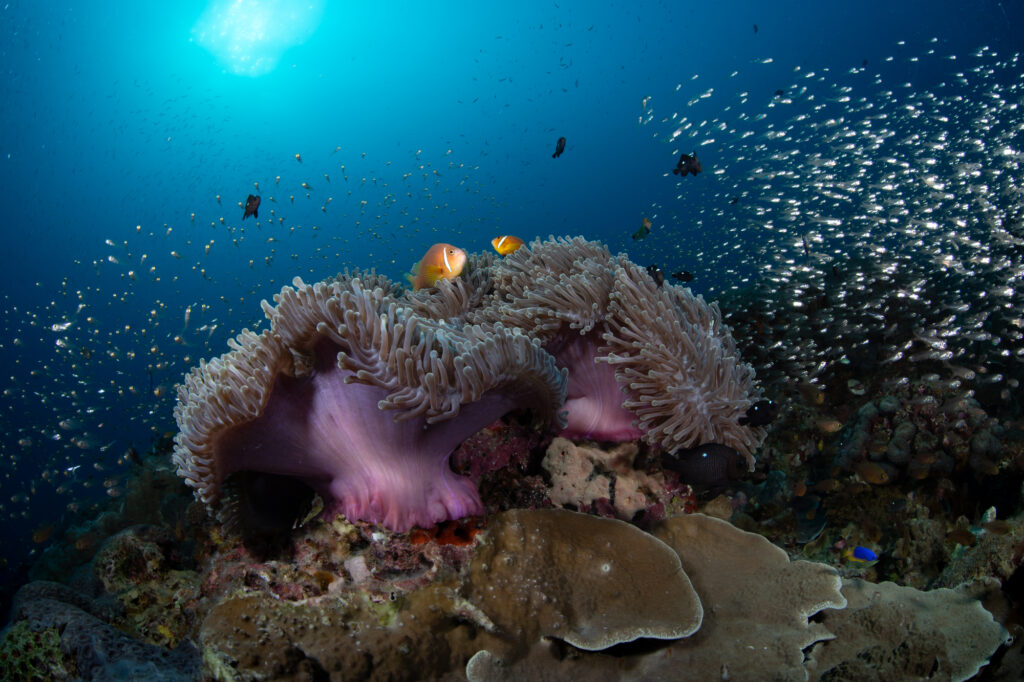
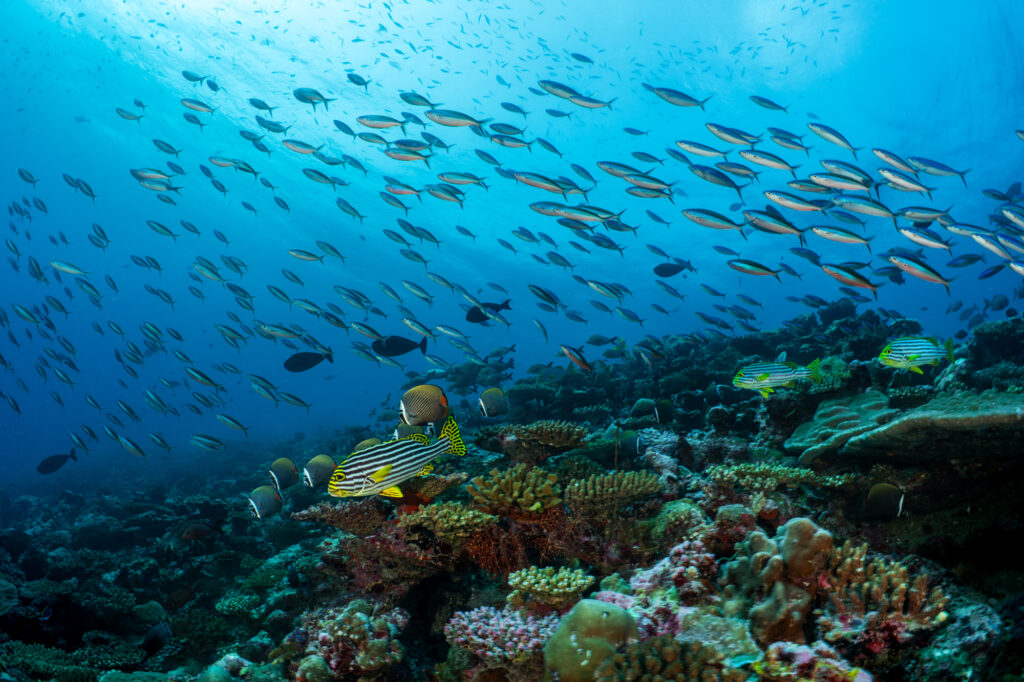
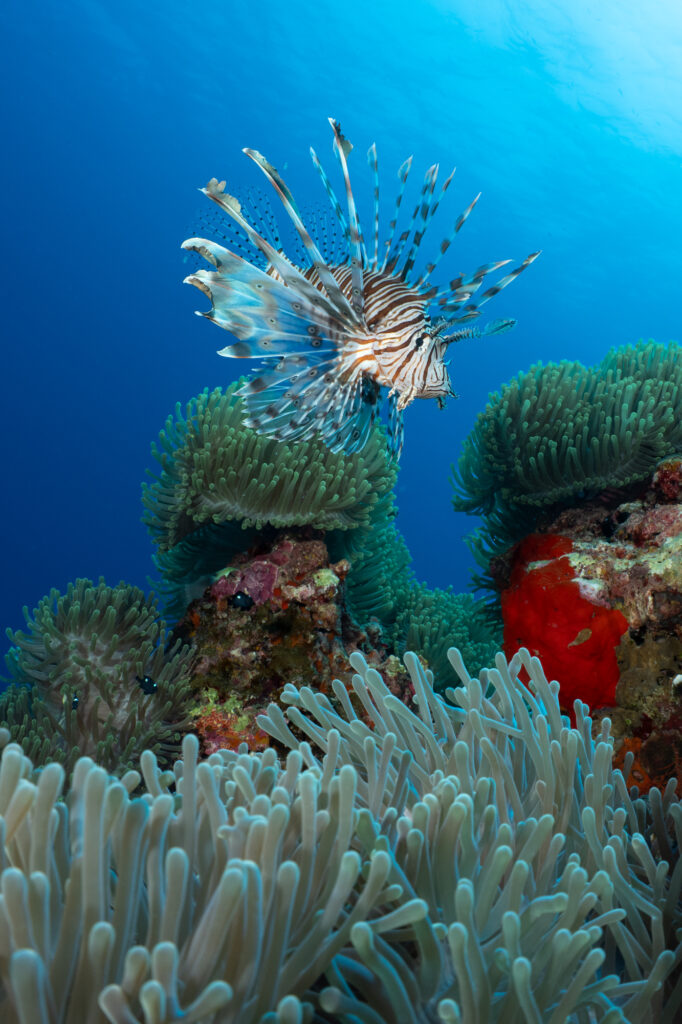
My first week or so here passed by in a blur – settling in, meeting the team, hotel orientations, and of course absorbing as many marine biology facts about Laamu as humanly possible. But my first snorkel was absolutely unforgettable. I jumped in from one of the hotel jetties, intending for a quick dip just to explore. Almost immediately, I was face-to-face with one of the healthiest reefs I’d ever seen, blanketed by corals stretching off into the deep blue distance. Fish zipped past me in all directions, a riot of bright colors and beautiful patterns. Just when I thought the excitement had peaked, the megafauna arrived: a couple of green sea turtles perched atop a pinnacle, a blacktip shark on the hunt, and even an enormous Napoleon wrasse! Inevitably, my “short snorkel” evolved into an hour-or-two escapade, and I arrived back looking both very pruned and very happy at the thought of my upcoming time here.
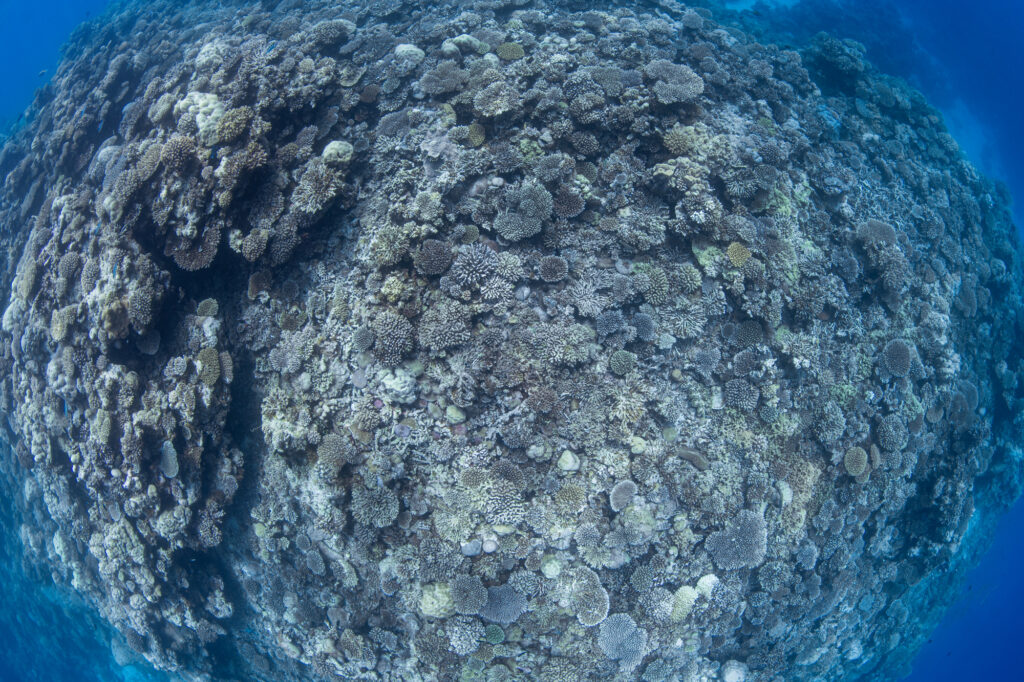
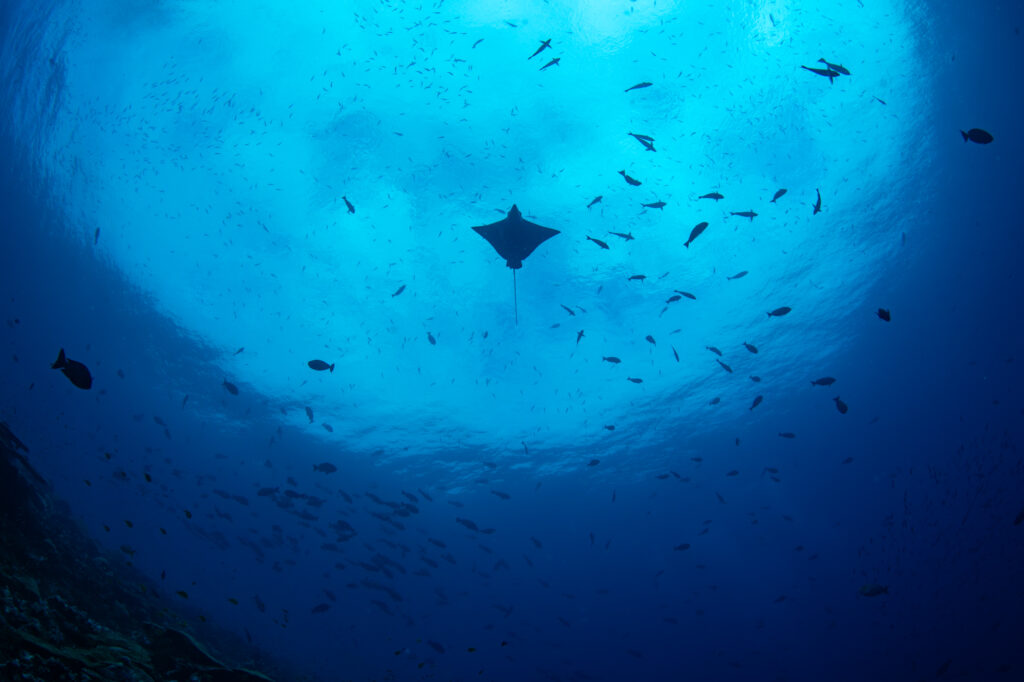
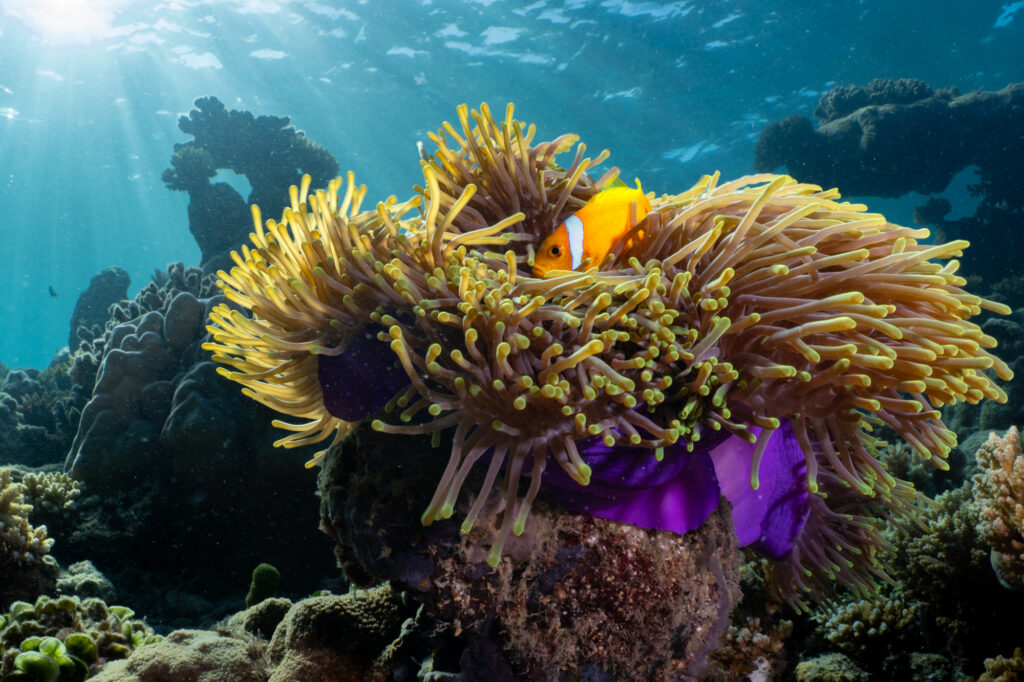
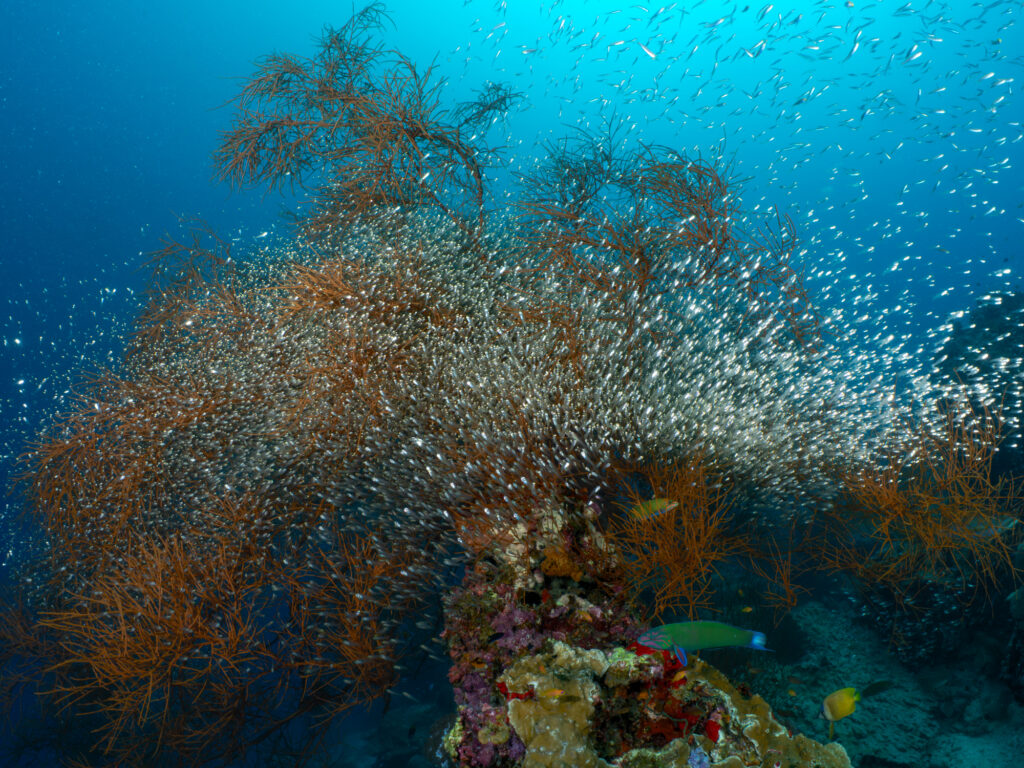
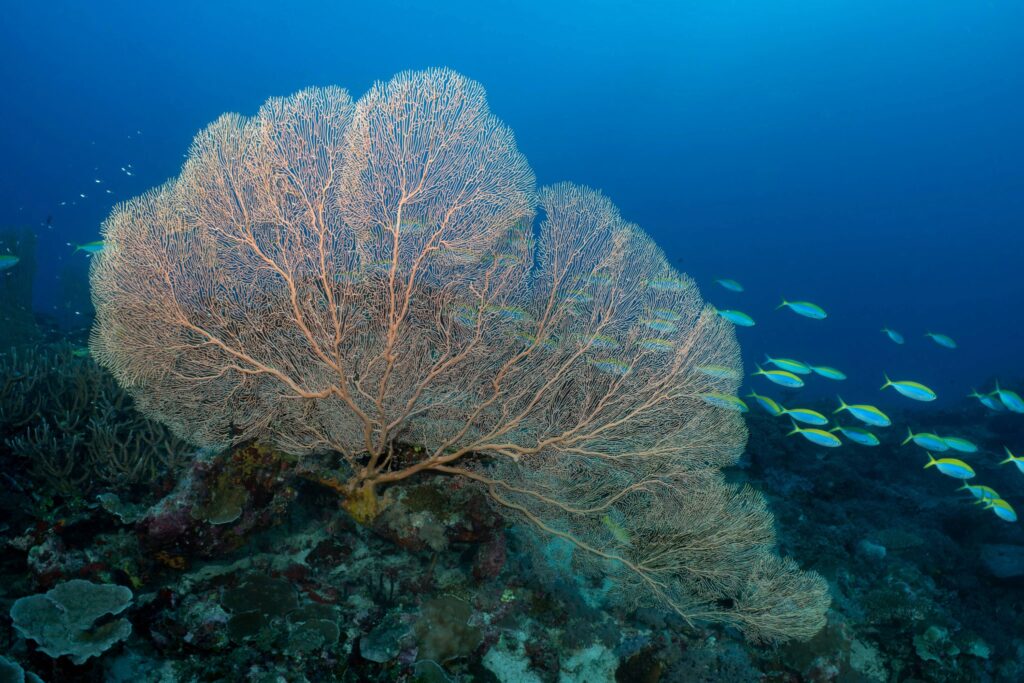
That snorkel made me realize just quite how far my baseline has shifted for healthy coral ecosystems. I’ve been lucky enough to dive on reefs all around the world, from the Caribbean to the Pacific, but the corals I’d previously encountered were always somewhat degraded, a patchwork of their former vitality. The only truly healthy corals I’d seen were in documentaries – the concept of a bustling reef seemed more a TV creation than a real-life possibility. But Laamu’s corals have transcended my baseline. Here, many nearby spots show near complete coral coverage, teaming with biodiversity across a vibrant, packed reefscape. This, among other factors, contributed to Laamu’s designation as a Mission Blue Hope Spot, a title given to special hotspots of marine biodiversity. Only 168 Hope Spots exist worldwide, emphasizing the pristine state of this atoll, sustaining marine life across the region.
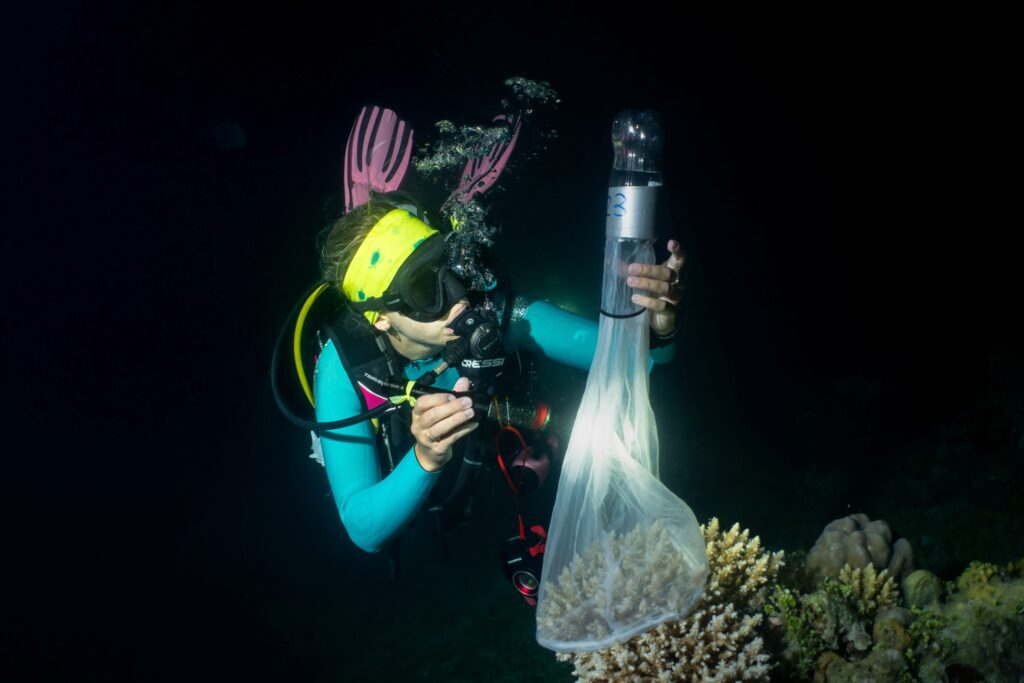
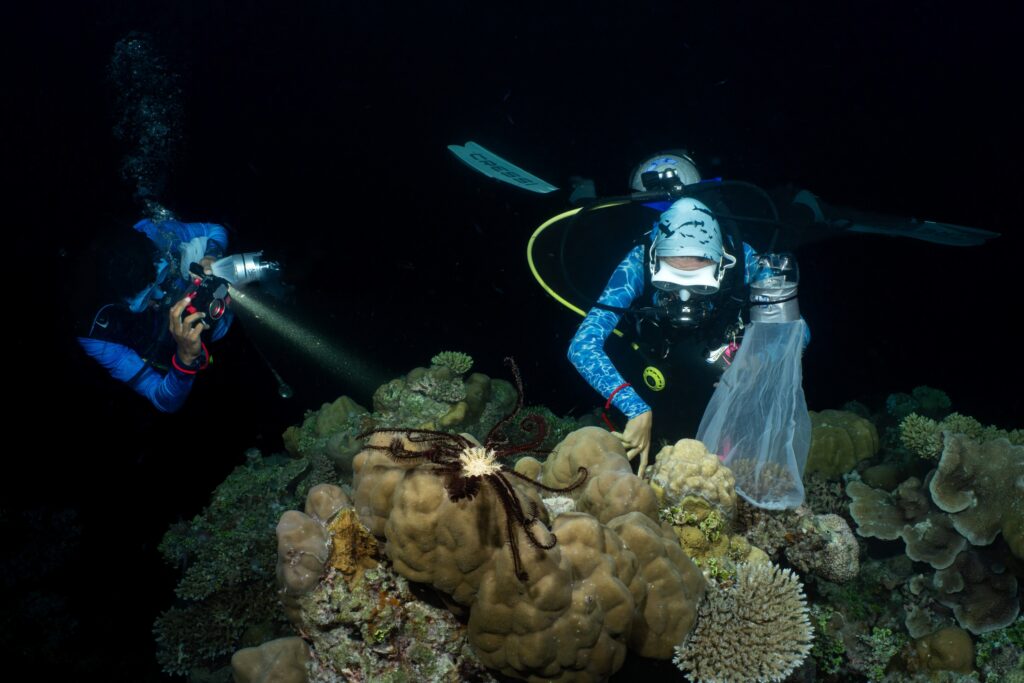
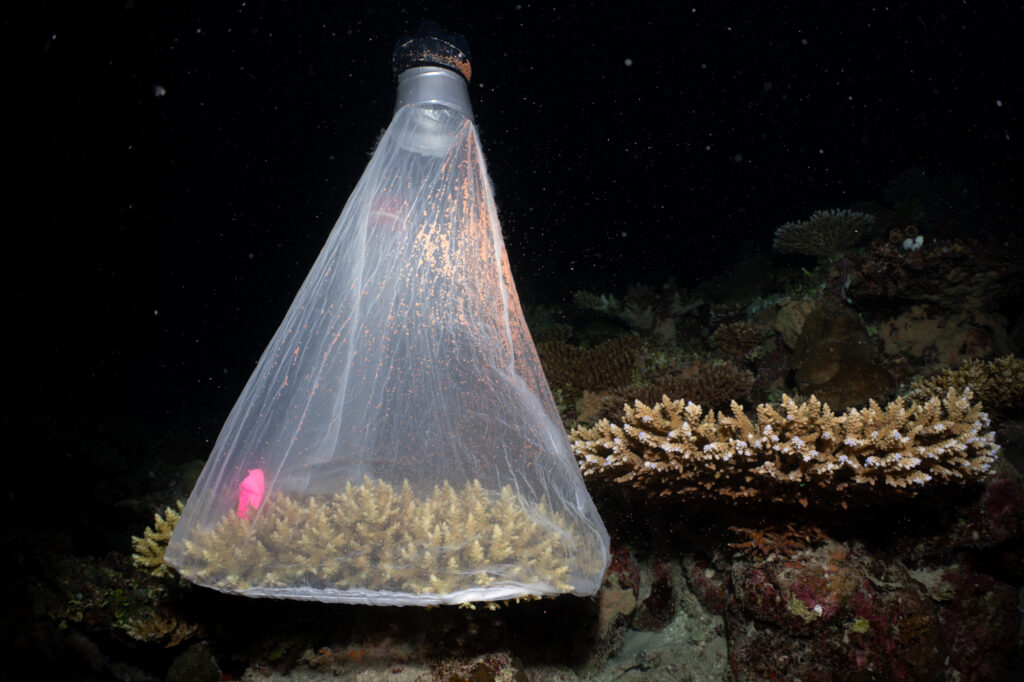
The local reef had one more welcome gift in store that week, by far the most mind-blowing experience of them all: coral spawning. Just after a handful of full moons each year, four different species of coral will release all of their eggs and sperm into the water, in a spectacular display of nature’s coordination. The event lasts only a few minutes, during which the black water transforms into a sea of brilliant pink dots, like snow flying away from the reef. The eggs and sperm mix into the water column, fertilizing them upon contact, sustaining the next generation of the reef. Here at MUI, we take that process one step further. During spawning, the team deploys around 20 cones over the spawning corals, designed to collect the eggs and sperm released. Our scientists then gather the catch of the cones and mix it at high densities, in turn can raise the fertilization rate by up to 80%.
The week after I arrived, our team checked a few of the coral candidates and discovered that a few Acropora species were packed with tiny pink eggs inside – a sure sign of imminent spawning. Thus began our night dive routine – each night during the possible spawning timeframe, a few of our team would dive along the reef, checking for signs of activity. We mainly looked for the so-called ‘coral setting’ – when a coral moves its eggs to the outside of its polyps, priming them for release. Fearing I’d miss the action, I jumped on every scouting dive that I could – I wasn’t about to miss this once-in-a-lifetime phenomenon!
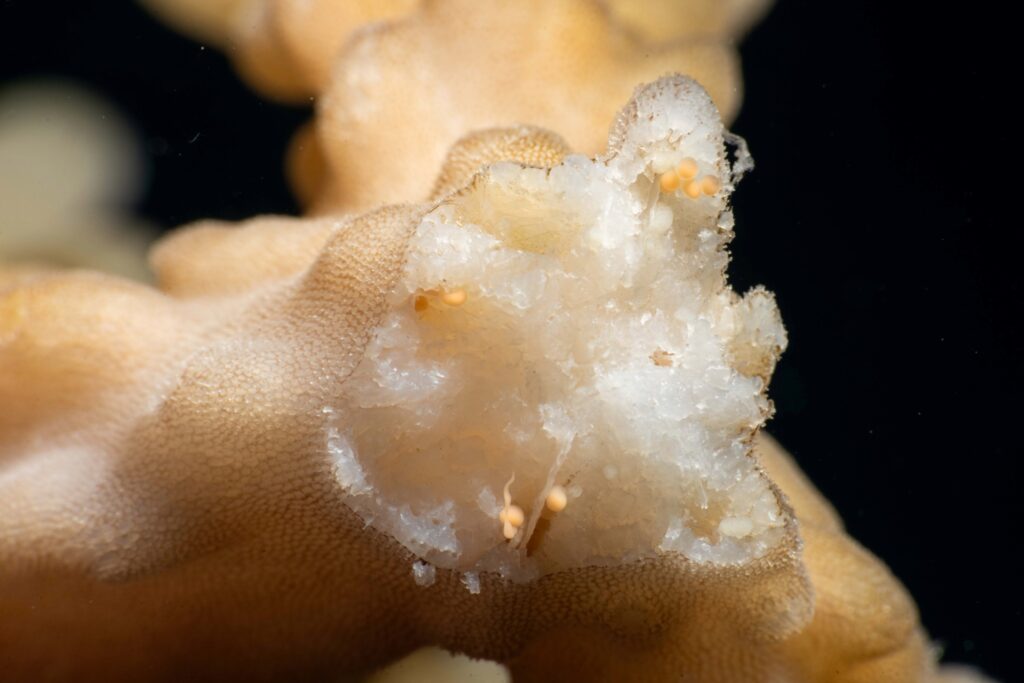
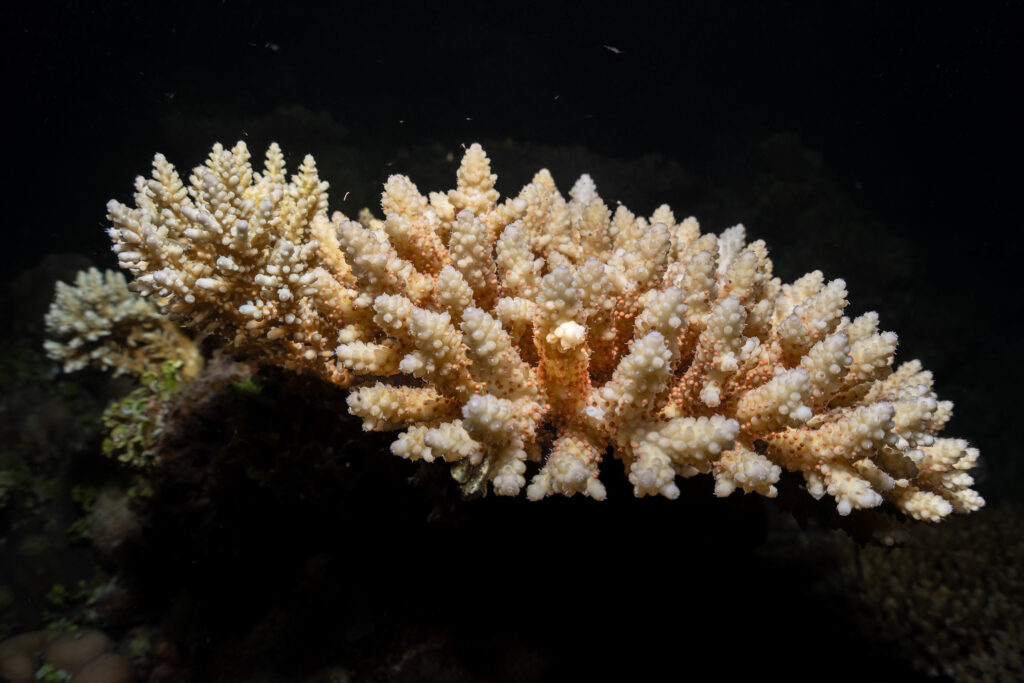
On night three, the news of coral setting finally came in! I was at a welcome dinner for new staff, dressed up for the special occasion, when I heard. Within 20 minutes, I’d raced to the dive center, traded my dress for my dive gear, and descended for the night dive of a lifetime. The MUI scientists were already in full swing, searching for setting and deploying coral cones up and down the reef. I found myself a beautiful little acropora dotted with tiny pink eggs, set up my camera, and began the wait.
Below: MUI scientists deploy the egg-catching cones over corals with signs of setting. Once our dive team identified evidence of setting, we had about a 45 minute window to deploy as many cones as possible, to maximize our egg collection.
Around 9pm, I noticed the first little dots starting to dislodge, delicately floating up and away. Moments later, in perfect sync, the coral polyps released their eggs all at once, and hundreds rose into the water column like reverse snow. The sight was otherworldly, pink dots flying in all directions, the ultimate egg-splosion. I snapped away, trying to capture every second, and absorb the magic of the moment myself too!
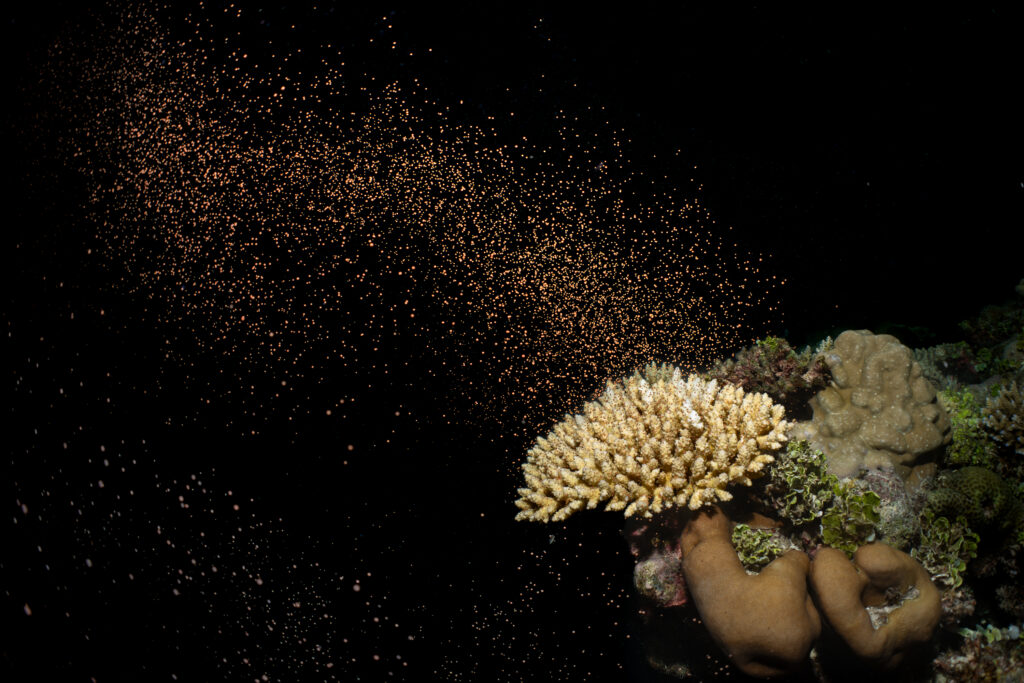
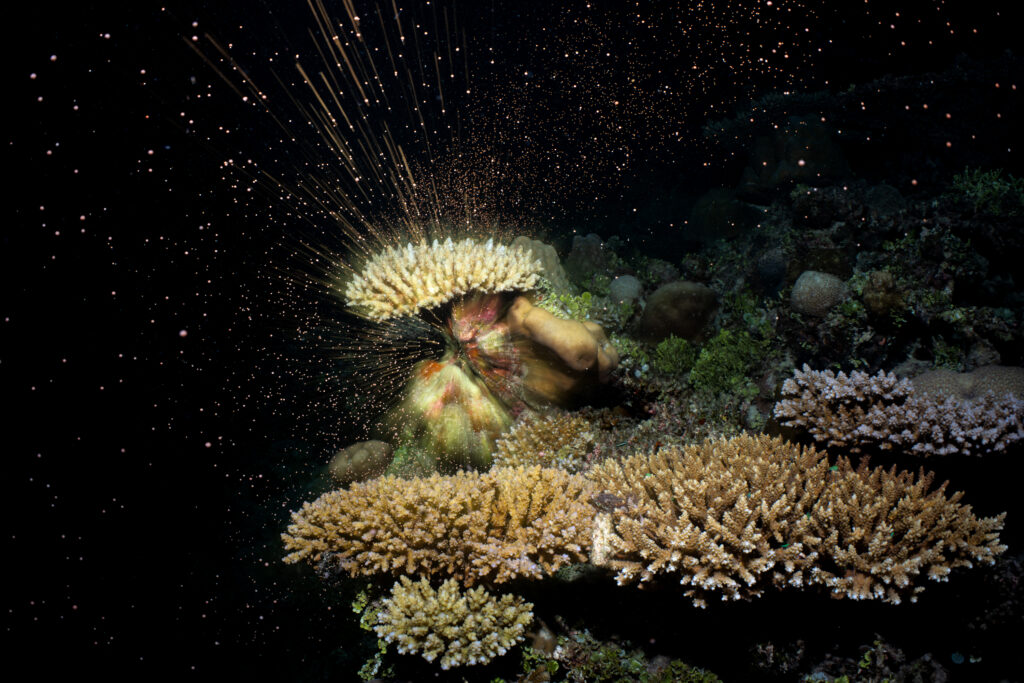
The show was over as quickly as it began – within five minutes, the eggs had drifted away, to begin the process of fertilization. But for our team, the work was only just beginning. Our dive team started by retrieving all 20 of the deployed cones, now filled with captured eggs. Upon sealing the cones shut, the surface support team dove down to bring the cones to the surface, appearing left and right like freediving phantoms. Back on land, our scientists then mixed all the cone contents together, a soupy concoction of eggs and sperm, fertilizing to become the next new corals on our house reef.
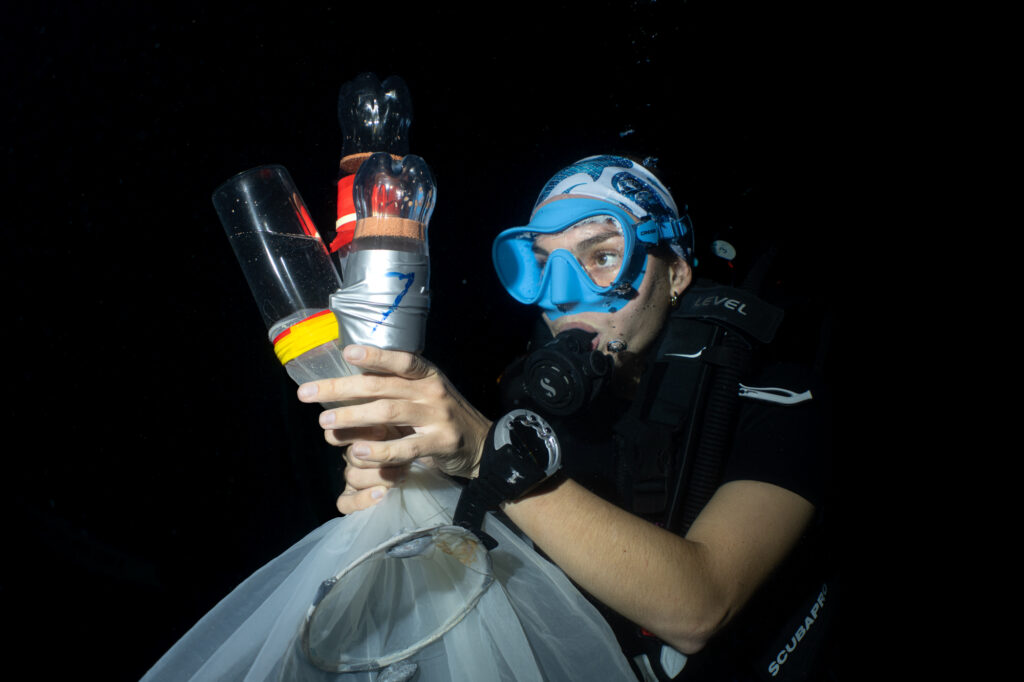
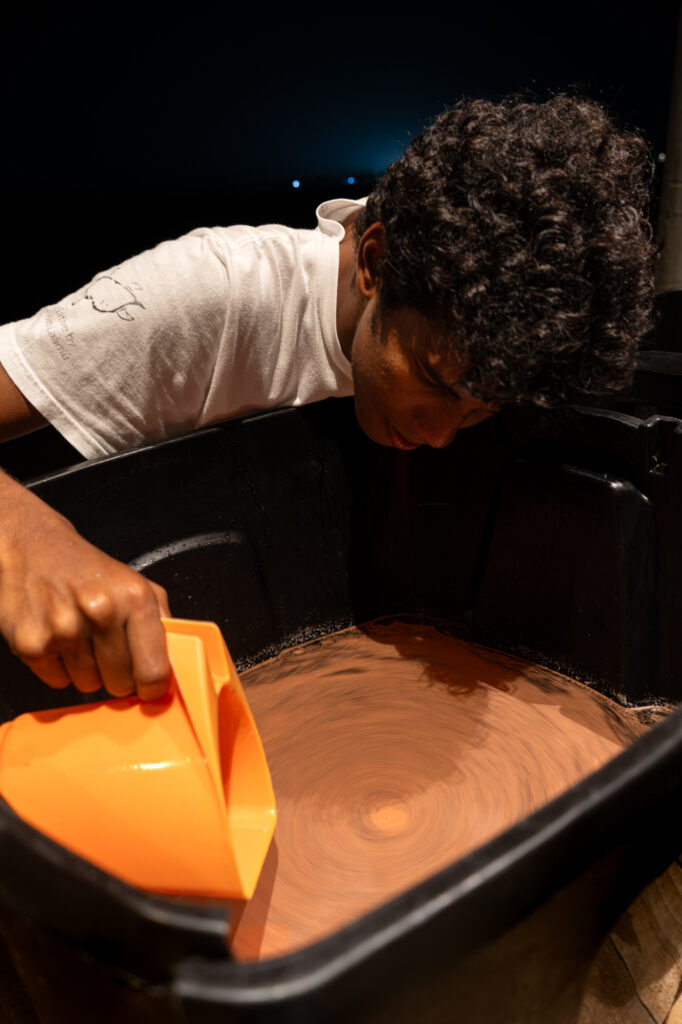
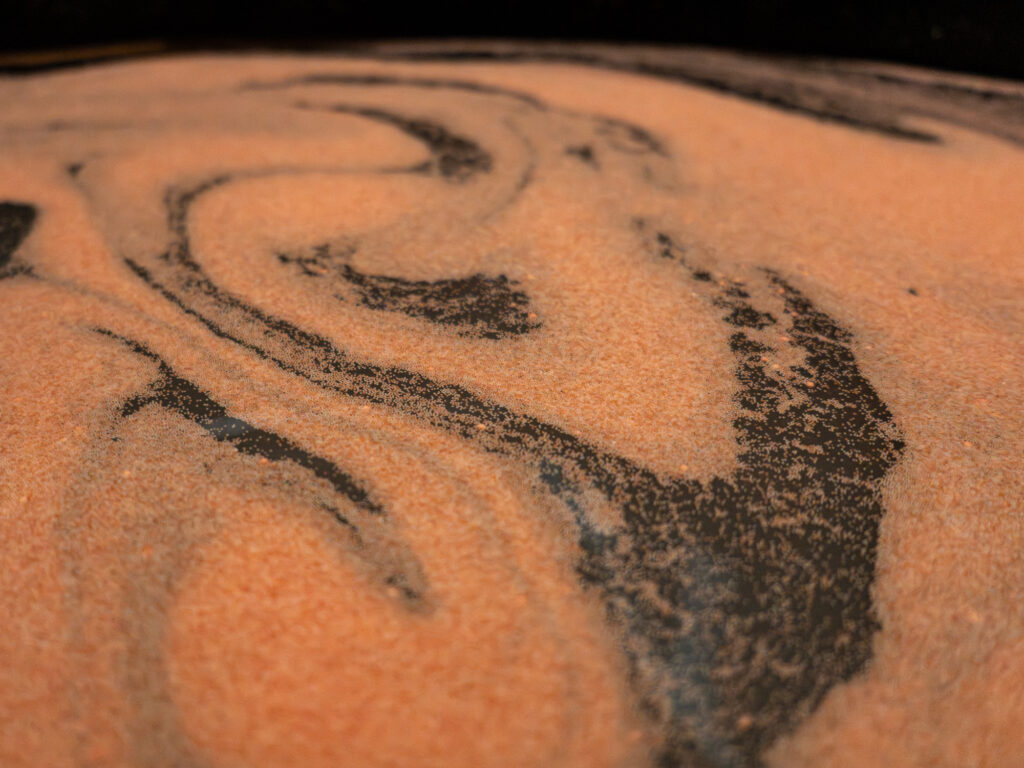
Above: Hadin, our coral researcher, stirs the eggs to improve fertilization. A close-up of the coral eggs in our fertilization bucket.
After an hour or so of incessant stirring, one of our scientists beckoned me over – she’d found the first signs of life! Peering through the macro camera, I saw a handful of so-called “coral butts,” the first cell division of each of the newborn corals. Success!
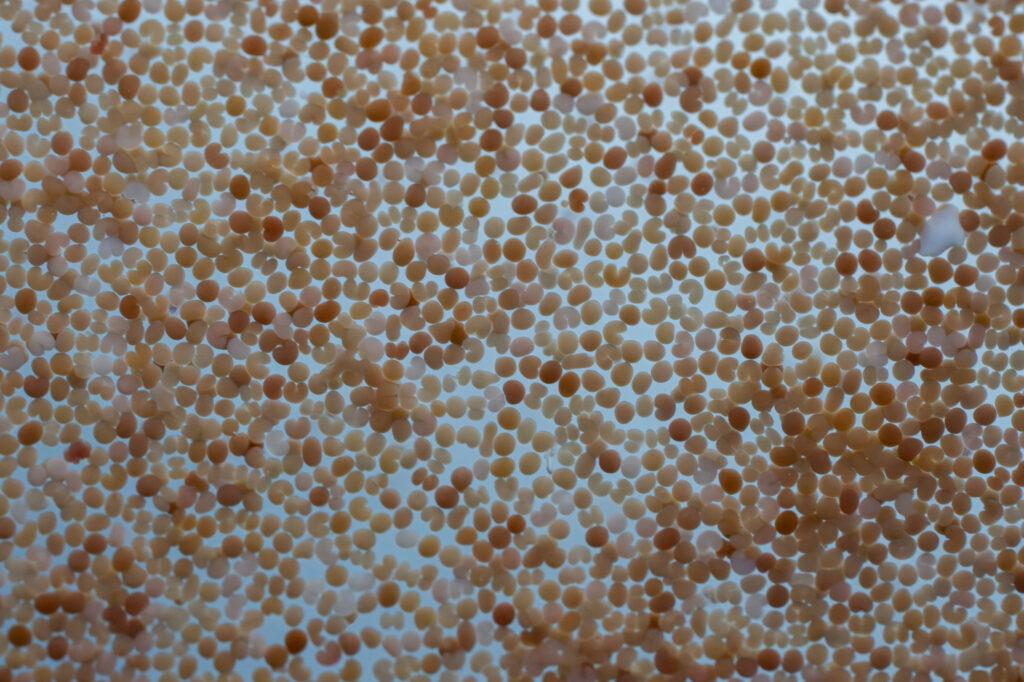
Within a week, the “coral butts” had morphed into coral larvae, microscopic little dots roving around our tanks, ready for new beginnings – our scientists released them right on our house reef, in hopes that they settle nearby and enrich our local ecosystem. Efforts like this are even more vital given the fine line between reef health and degradation. Just two years ago, Laamu’s reefs experienced a devastating mass bleaching event, affecting a significant amount of corals across the atoll. While many have bounced back remarkably, their resiliency to future heat stress remains to be seen. Through our restoration, the MUI team hopes to keep our corals firmly on the side of healthy, bolstering our reef with influxes of baby corals and hopefully strengthening its chances against ocean warming.